
Understanding CVI: What parents and caregivers should know
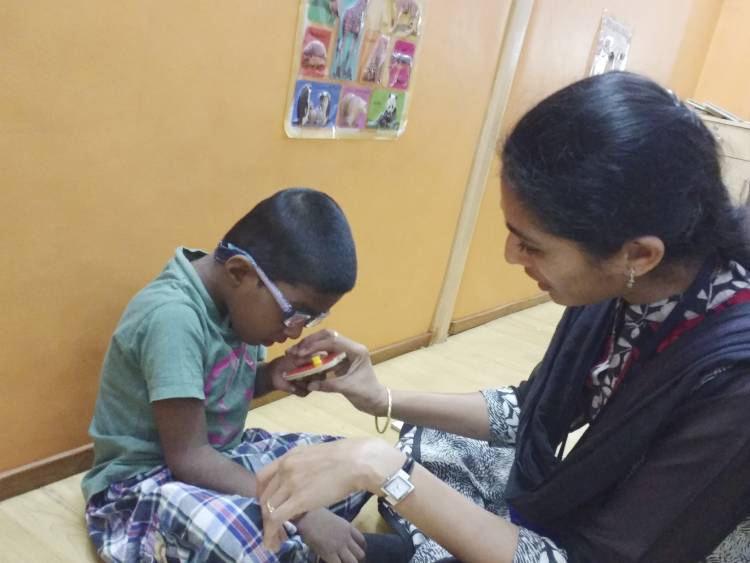
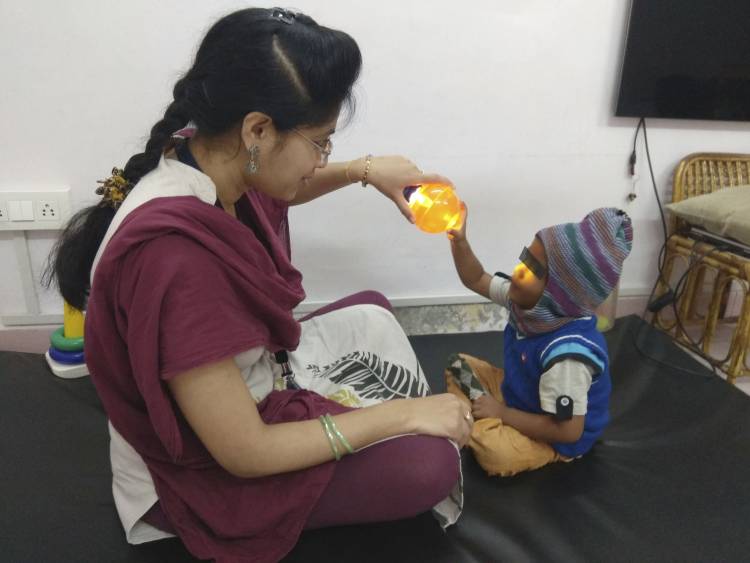
Cortical/Cerebral Visual Impairment (CVI) is one of the leading causes of vision difficulties in children worldwide. Unlike common eye conditions, CVI is caused due to damage to the visual processing centres of the brain. In many cases, a child’s eyes may appear healthy and normal, yet the child struggles to see, understand, or use vision effectively in everyday life.
What causes CVI?
A brain injury before, during, or shortly after birth may cause CVI. Common causes include:
- Lack of oxygen or blood supply to the brain — often because of a stroke
- fluid build-up in the brain
- Infections that reach the brain
- Head injury
- Premature birth
- Certain genetic, metabolic, or chromosomal conditions
How do you recognize CVI?
Parents should look out for the following and seek a comprehensive CVI assessment if their child:
- Takes time responding to things they see
- Only sees certain parts of what they see in front of them
- Difficulty recognizing faces and objects
- Difficulty recognizing things from a clutter
- Difficulty in reaching out to things they look at
- Reacts slowly to visual cues
- Notices moving objects more easily than stationary ones
- Prefers to look at things with their peripheral (side) vision
- Tends to stare at light or are light sensitive
- Takes extra time to look at objects
- Prefers bright or specific colours
- Tires quickly doing visual tasks
- Vision is inconsistent, varying from day to day or situation to situation
Parents and caregivers should be alert when a child with a history of brain injury, developmental delay, or neurological challenges shows unusual visual behaviours.
How do you confirm CVI?
CVI cannot be confirmed with a single test. A definitive CVI confirmation will take time, and most cases are identified at the toddler stage or later. Only a trained paediatric ophthalmologist, neurologist, or cvi trained rehabilitation professional will be able to definitively confirm a case as Cortical/Cerebral Visual Impairment.
What do you manage CVI for better quality of life?
Early identification and timely intervention can make a meaningful difference. With appropriate support, children with CVI can learn to use their vision more effectively and manage visual complexity in daily life.
CVI resource centres provide comprehensive clinical evaluation and specialised CVI assessment to understand a child’s CVI range and visual functioning. They provide individualised intervention plans combining vision-specific strategies with allied services such as speech and language therapy, physiotherapy, occupational therapy, cognitive development support, and behavioural therapy. Families, educators, and caregivers are guided with practical strategies to support children at home, in school, and in the community.
Professionally trained, multi-disciplinary teams across the LVPEI network provide CVI therapies and care through the dedicated CVI Resource Centres. Through structured assessment and coordinated rehabilitation, LVPEI aims to help children with CVI reach their full potential.
“Many children with CVI are often misunderstood as having poor attention or learning difficulties. Recognizing the visual challenges early can transform their ability to learn, interact, and thrive.” says Mrs Bharathi Ampolu, rehabilitation therapist at the Kallam Anji Reddy campus, Hyderabad.
For further information on CVI confirmation and rehabilitation, call 040 – 68102841/42
About L V Prasad Eye Institute:
Established in 1987, with the vision, ‘to create excellent and equitable eye care systems that reach all those in need,’ the L V Prasad Eye Institute (LVPEI), a comprehensive eye health facility, is a World Health Organization Collaborating Centre for the Prevention of Blindness.
In pursuance of this vision, LVPEI clinician scientists work at the cutting edge of eye research. Through its five-tier ‘Eye Health Pyramid’ and cross-subsidy models, LVPEI provides more than 50% of its services entirely at no cost to the patient, irrespective of the complexity of care needed. LVPEI is among the world’s top eye researchers with over 5,000 published scientific papers in prominent international journals.