
TEXMiN and GIREDMET, Russia Sign MoU to Strengthen Rare Earth and Critical Mineral Technologies at III–2026
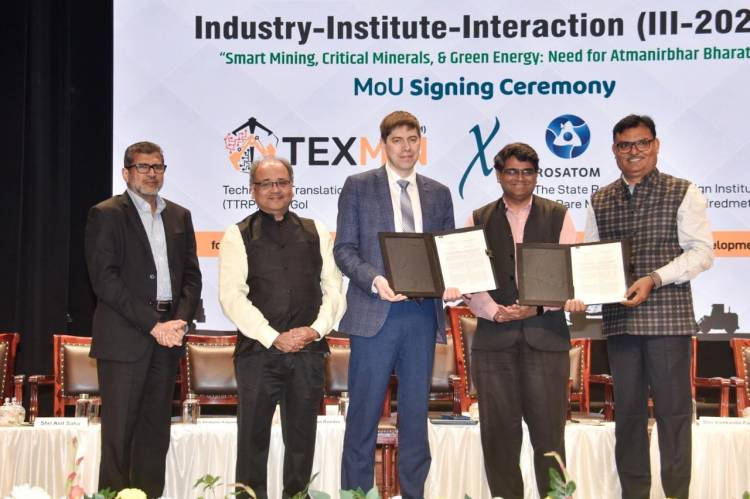
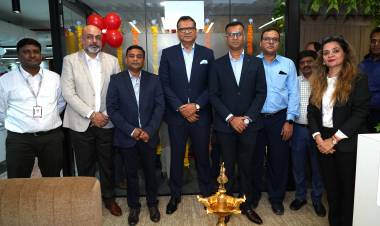
TEXMiN Foundation (Technology Translation Research Park, Department of Science & Technology, Government of India), IIT (ISM) Dhanbad, signed a strategic Memorandum of Understanding (MoU) with Joint Stock Company “GIREDMET State Research and Design Institute of Rare Metal Industry, JSC” (GIREDMET, JSC), an entity of Rosatom State Atomic Energy Corporation, Russia, represented by Dr. Konstantin Ivanovskikh, Deputy Director of, GIREDMET, to advance cooperation in rare metals and critical mineral technologies. The MoU was signed during the Industry–Institute Interaction 2026 (III–2026) Conclave and Exhibition at IIT (ISM) Dhanbad.
The MoU was exchanged as part of the flagship signing ceremony held in the august presence of Dr Shivkumar Kalyanaraman, Chief Executive Officer, Anusandhan National Research Foundation (ANRF), Government of India, underscoring the global and strategic importance of critical minerals and rare earth technologies.
The purpose of the MoU is to establish a framework for strategic cooperation in the field of mining—from exploration and mineral beneficiation to extraction, separation, refining, and advanced materials development. The collaboration will focus on joint research and development of process technologies for rare earth and critical mineral processing, as well as the development of high-purity metals and alloys, rare earth magnets, refractory metal powders, materials for electronics and optics, and knowledge exchange across the rare metal ecosystem.
Importantly, the partnership reflects the shared priorities of India and Russia in strengthening their domestic rare metal and critical mineral industries, enhancing technological self-reliance, and building resilient industrial value chains. Both countries face common strategic tasks: securing critical raw materials, developing indigenous processing capabilities, and creating advanced materials for energy, electronics, and strategic sectors. The collaboration is designed to support these goals while promoting a sustainable pathway for industrial and economic development.
Speaking on the collaboration, Prof. Sukumar Mishra, Director, IIT (ISM) Dhanbad and Chairman, Hub Governing Board, TEXMiN Foundation, said, “Critical minerals and rare earth technologies are central to India’s energy transition, electronics manufacturing, and strategic sectors. This partnership with GIREDMET brings together global expertise and translational research capabilities to strengthen India’s self-reliance in rare metals and advanced materials.”
Prof. Dheeraj Kumar, Deputy Director, IIT (ISM) Dhanbad and Project Director, TEXMiN, added, “The MoU establishes a comprehensive research and technology translation framework covering the entire rare metal value chain. Through pilot validation, advanced processing technologies, and digital integration, we aim to accelerate the deployment of sustainable and industry-ready solutions aligned with Atmanirbhar Bharat.”
Speaking on the partnership, Dr. Konstantin Ivanovskikh, Deputy Director of, GIREDMET said, “This partnership with TEXMiN marks an important step in strengthening international cooperation in rare metals and critical mineral technologies. By combining GIREDMET’s expertise in rare earth metallurgy, advanced process engineering, and materials development with TEXMiN’s translational research ecosystem, we aim to accelerate the development and pilot-scale validation of high-impact technologies across the rare metal value chain. Our collaboration will support innovation in extraction, separation, refining, and recycling processes as well as in production of functional materials for high-tech industries, while fostering expert exchange and joint research. Together, we look forward to contributing to sustainable resource development and advancing technological capabilities aligned with global energy transition priorities.”
Under the agreement, the two institutions will undertake joint R&D on rare earth and critical mineral processing technologies, including pilot-scale validation and technology translation of GIREDMET processes at TEXMiN under the Technology Translation Research Park (TTRP) framework. A key thrust area includes the development of technologies for producing high-coercivity permanent magnet blocks based on Nd-Fe-B, supported by a complete rare earth metallurgical cycle.
The partnership will also focus on hydrometallurgical recycling technologies for lithium-ion batteries to recover valuable metals (Lithium, Nickel, Cobalt), alongside recovery solutions for critical minerals from legacy mine dumps, tailings, and low-grade or complex ores. Advanced digital integration through digital twin-enabled smart processing plants, combining process know-how with AI/ML and sensor systems, will further strengthen innovation outcomes.
The MoU envisages upscaling technologies to higher Technology Readiness Levels (TRL) and enabling industry-facing demonstrations aligned with India’s National Critical Mineral Mission (NCMM) priorities and the Russian Federal Project for the Development of Rare Metal Industry. In addition, the collaboration includes expert exchange, joint doctoral and applied research supervision, specialised training programmes, and advisory and technical support to governments, PSUs, and industry stakeholders on critical mineral projects and policy inputs.
As a tangible next step in this India-Russia collaboration, representatives of TEXMiN and IIT (ISM) Dhanbad are expected to take part in the upcoming International Congress on Rare Metals, Materials and Related Technologies (RAREMET-2026), to be held in Moscow on May 20–22, 2026. The Congress will provide an important international platform to discuss global scientific and technological challenges in rare metals, critical materials, and the sustainable development of high-tech industries.
This collaboration reinforces TEXMiN’s mandate of developing commercially viable technologies in exploration and mining, while expanding international research partnerships to address emerging challenges in critical minerals and advanced materials innovation.