

upGrad School of Technology and ADYPU Launch Industry-Integrated B.Tech to Build Job-Ready Engineers
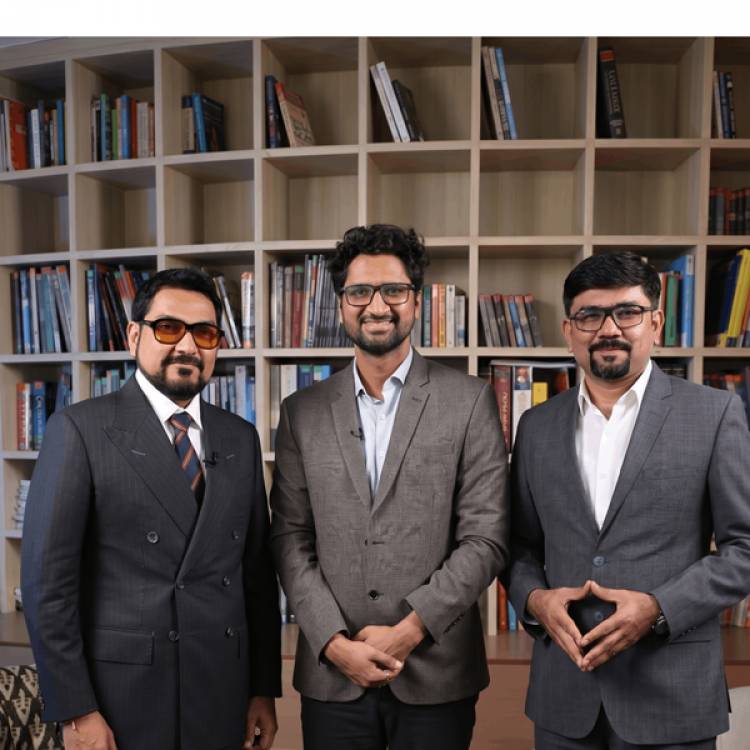
4-Year Residential Program Combines UGC-Recognised Degree with Industry-Integrated AI Engineering Education
Pune, 22/06/2026: upGrad School of Technology (UGSOT) and Ajeenkya DY Patil University (ADYPU) today announced a strategic partnership to launch a four-year residential B.Tech in Computer Science Engineering (Artificial Intelligence) Program, designed to equip students with a UGC-recognised degree alongside industry-relevant AI engineering skills from the outset.
The program aims to bridge the widening gap between traditional engineering education and the rapidly evolving demands of the AI-driven workforce. The inaugural batch is scheduled to commence in August–September 2026.
Open to students who have completed Class 12 with a minimum of 50% marks in Physics, Chemistry, and Mathematics (PCM) from a recognised board (CBSE, ICSE, or State Boards).
Under the collaboration, Ajeenkya DY Patil University will provide campus infrastructure, residential learning environment, and award a UGC-recognised B.Tech degree. UGSOT in collaboration with ADYPU will support the delivery of an industry-integrated learning experience featuring live instruction from engineers working at leading global technology companies, an AI-first curriculum refreshed every six months, hands-on coding and product-building sprints from the first semester, and regular interactions with founders, CXOs, and industry leaders.
Students can choose from three future-focused specialisations:
• Full Stack AI & Cloud Innovation – covering end-to-end software development, AI applications, and cloud-native technologies
• AI & Quantum Computing – combining artificial intelligence with emerging quantum computing concepts and applications
• AI & GenAI Engineering – focused on generative AI, large language models, and next-generation AI product development
In addition to technical training, the program integrates a startup track, across seven semesters, enabling students to develop entrepreneurial, leadership, and business acumen alongside engineering expertise.
Graduates will also gain access to upGrad's career support ecosystem of 3,000+ hiring partners and a placement network that facilitated over 110,000 placements between FY23 and FY25, strengthening their pathways to employment and career growth.
Commenting on the partnership, Dr.Ajeenkya DY Patil, Chairman, Ajeenkya DY Patil Group and Chancellor, Ajeenkya D.Y. Patil University, said: “At the Ajeenkya DY Patil Group, we have always believed that education must evolve with the future. This partnership brings together academic credibility and industry relevance, ensuring students graduate with both a recognised degree and the skills needed to thrive in a rapidly changing world.”
Vishwa Mohan, CEO, upGrad School of Technology, said: “India has never had a shortage of engineering talent — it has had a shortage of engineering education that keeps pace with what the industry actually needs. This partnership with Ajeenkya DY Patil University is built to close that gap: a real degree, a real campus, and real skills that employers hire for from Day 1. That is the model we are bringing to every university we work with.”
Adding to this, Mehul Khandhedia, Chief Revenue and Outcome Officer, upGrad School of Technology "The employability gap in engineering is not a curriculum problem — it is a systemic one. Our partnership with ADYPU fixes it at the root: by building industry outcomes directly into the degree, not as an add-on after graduation."
India produces nearly 1.5 million engineering graduates annually, yet a significant employability gap continues to challenge the sector. While engineering remains one of the country's most popular career paths, many graduates may lack the industry-ready skills required in emerging fields such as AI, cloud computing, and advanced software engineering. As demand for future-ready talent accelerates, the partnership between upGrad School of Technology and Ajeenkya DY Patil University aims to bridge this gap through an industry-integrated, AI-first engineering education model.